Reseña · 14 min de lectura · Actualizado 2026-08-06
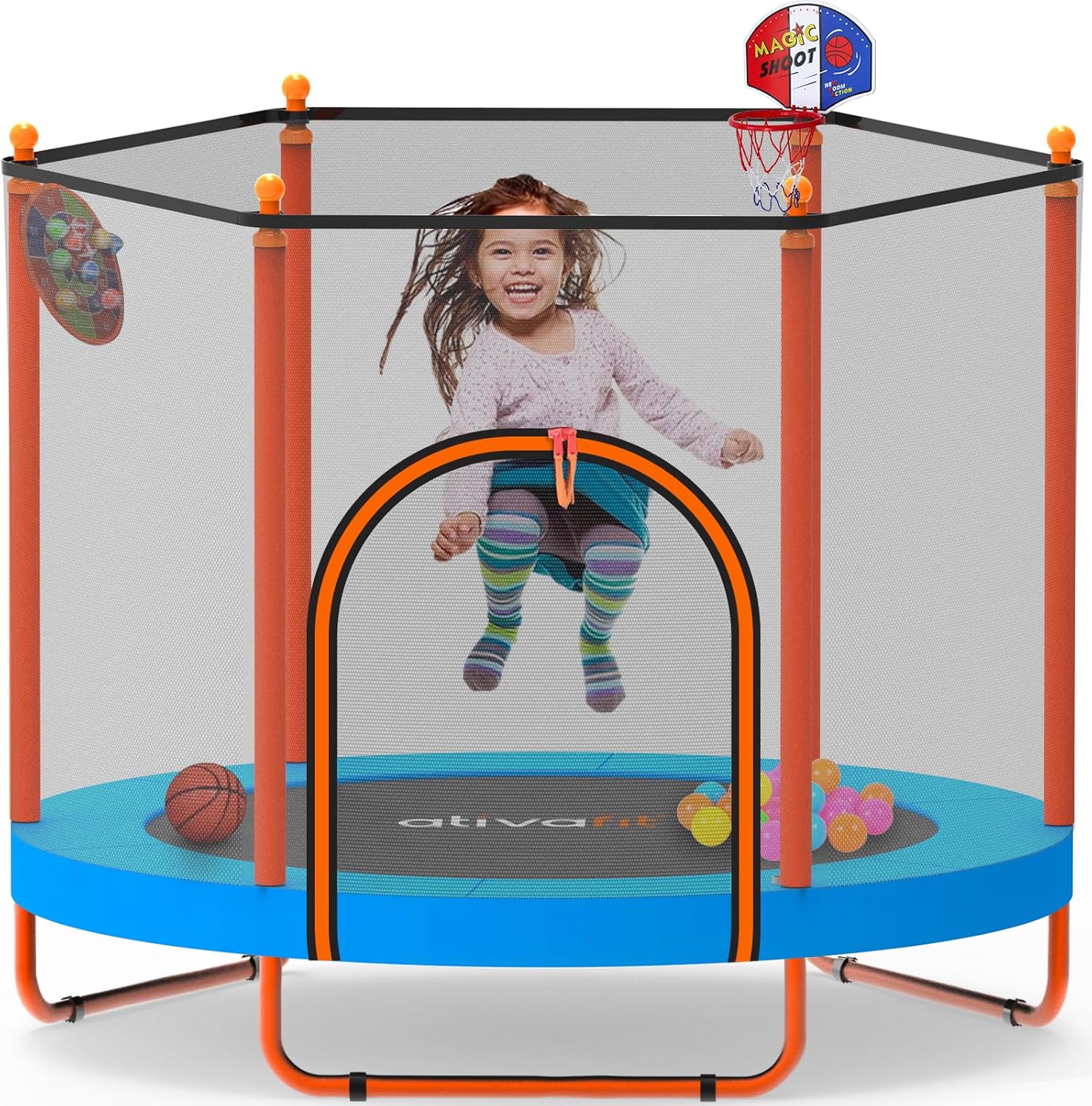
60'' Rebounder Trampoline Indoor Outdoor for Kids Ages 1-8
Best Kids Trampolines of 2026: Backyard & Indoor Picks, Safety First
¿Necesitas una reseña que no está en esta lista?
Cuéntanos qué necesitas—lo investigamos y te avisamos cuando esté listo.
Looking for the safest and most fun kids trampolines? Our 2026 guide includes top indoor and backyard picks, emphasizing critical safety features and addressing expert recommendations.
Veredicto
For families considering a children's trampoline, this guide prioritizes models with robust safety features and responsible use guidelines. While fun, it's crucial to weigh the AAP's cautionary stance on injury risks, making supervision and design paramount.
The Safest Kids Trampolines for 2026
When evaluating the safest kids trampolines for 2026, our primary focus goes beyond just the presence of a safety net. While an enclosure is a non-negotiable feature for preventing falls off the mat, true safety encompasses a more holistic design. We looked for models that integrate robust frame construction from galvanized steel to resist rust and provide stability, along with spring systems that are either completely covered by thick pads or, even better, feature springless designs to eliminate pinch points. Another critical element is the overall build quality of the jumping mat itself; durable, UV-resistant polypropylene is essential for longevity and preventing tears, especially for outdoor models exposed to the elements.
Our top picks prioritize impact absorption and stability. For instance, some leading brands now incorporate proprietary mat materials or spring configurations designed to reduce the jarring impact on joints, which is particularly beneficial for younger users. Legs should be wide-set and numerous to prevent tipping, even during energetic play. We also gave higher marks to trampolines with easily accessible entry points that don't compromise the integrity of the enclosure, often through zippered openings that can be securely fastened. Consider the size carefully: a smaller trampoline might seem safer for tiny tots, but an appropriately sized one for their age and weight, allowing ample room to jump without colliding with the net or other users, is actually paramount. Remember that supervision, regardless of the trampoline's features, remains the ultimate safety measure.
While we highlight models with superior safety features, it's crucial to acknowledge that no trampoline can eliminate all risks. Even with the best designs, improper use, lack of supervision, or multiple jumpers at once significantly increase the chance of injury. Our selections aim to minimize these risks by providing the most protective physical design elements available, giving parents a better foundation for safe play. For those looking to round out their backyard activity options, consider exploring our guide to the Best Outdoor Toys of 2026: Active Play for Every Age.
What to look for (ideal feature checklist)
Before you buy, use this CheeklyPicks checklist. Strong options usually clear most of these bars:
• Full enclosure net (with no gaps) • Sturdy, rust-resistant frame • Padded spring cover or spring-less design • Appropriate size for user weight and space • Easy-to-follow assembly instructions • UV-resistant mat and enclosure • Ladder for safe access (for larger trampolines) • Clear weight limits and age recommendations
What the AAP Says About Home Trampolines
It's essential for any discussion about kids' trampolines to directly address the American Academy of Pediatrics (AAP) stance on home trampoline use. The AAP has consistently advised against the use of trampolines in homes and backyard settings due to the significant risk of injury. Their position statement highlights that despite advancements in safety features like enclosure nets and padding, the rate of trampoline-related injuries remains high, particularly among children. These injuries range from sprains and fractures—especially of the lower extremities—to more severe head and neck injuries, some of which can have long-term consequences. The most common mechanisms of injury include falls off the trampoline, colliding with other jumpers, and landing improperly while performing stunts.
The AAP emphasizes that most injuries occur even with adult supervision and when safety features are in place. They point out that a significant portion of injuries happen when multiple children are jumping simultaneously, a scenario often difficult to prevent in a home environment. While commercial trampoline parks often have trained staff, foam pits, and stricter rules (like one jumper per trampoline), these controlled environments do not fully eliminate risk either, but their injury rates are generally lower than home settings. For parents considering a home trampoline, understanding this official medical recommendation is paramount.
Given the AAP's strong recommendation, our approach is to provide information that empowers parents to make informed decisions, not to solely promote trampoline sales. If a family chooses to have a home trampoline, despite the AAP's warnings, then it becomes even more critical to select a model with the most advanced safety features available and to rigorously enforce strict safety rules. These rules should include one jumper at a time, constant adult supervision, and a complete prohibition on flips or dangerous stunts. We advocate for prioritizing prevention and being fully aware of the inherent risks, rather than relying solely on safety features to prevent all harm.
Key Safety Features to Look For
When selecting a kids' trampoline, look beyond basic features and scrutinize the details that genuinely contribute to injury prevention. The enclosure net system is non-negotiable; it should be made from durable, UV-resistant material that attaches securely to the outside edge of the jumping mat, preventing contact with the springs and frame. The poles supporting the net should be padded and curve outwards, away from the jumping area, to minimize collision risk. Entry and exit points, typically zippers, need to be robust and secure, ensuring they don't unexpectedly open during play.
Spring and frame design are critical safety elements. Opt for trampolines with heavy-gauge, rust-resistant galvanized steel frames, preferably with T-sockets or reinforced connections that provide stability and prevent the frame from twisting or collapsing. Springless designs, which use flexible composite rods instead of metal springs, are an excellent safety innovation as they eliminate pinch points and hard impact zones. If traditional springs are present, ensure they are completely covered by thick, durable safety pads that span the entire width of the frame and are securely fastened to prevent shifting during use. These pads should be resistant to weather and UV degradation to maintain their protective qualities over time.
Consider the overall stability and quality of the mat itself. The jumping mat should be made from high-quality, UV-protected polypropylene to withstand the elements and repeated stress without tearing. The leg structure should feature multiple U-shaped or W-shaped legs for maximum ground contact and stability, reducing the likelihood of tipping. Always check for certifications from reputable safety organizations, though these are more common for commercial models. Finally, placement is a safety feature: ensure the trampoline is on a level surface, clear of overhead obstructions like tree branches, and has ample clear space (at least 6-8 feet) around its perimeter, even with an enclosure net in place.
Best Backyard Trampolines for Kids
While backyard trampolines offer immense fun and exercise, it's crucial to acknowledge the American Academy of Pediatrics (AAP) stance. The AAP actually recommends against recreational trampoline use at home due to the high risk of serious injuries, even with safety enclosures. Common injuries range from sprains and fractures to head and neck trauma, often resulting from falls, collisions, or improper landings. Therefore, any decision to purchase a backyard trampoline must be made with a full understanding of these risks and a commitment to stringent safety protocols that go beyond just the manufacturer's provided features.
For families who decide a backyard trampoline is still the right choice, prioritizing models with robust safety features is paramount. Look for trampolines with thick, UV-resistant frame pads that completely cover the springs, a tall, durable enclosure net that is securely attached to the jumping mat and poles, and a stable, heavy-duty frame that won't easily tip or shift. Consider the weight capacity – trampolines designed for multiple jumpers increase the risk of collisions, a primary cause of injury, so enforcing a strict one-jumper-at-a-time rule is vital, regardless of the trampoline's rated capacity. Entry systems should be easy to use but secure enough to prevent unsupervised access.
Beyond product features, parental supervision is the most critical safety measure. Children should never be left unsupervised on a trampoline, and adults should actively monitor to ensure safe jumping practices, such as no flips or roughhousing. Regular maintenance is also key: inspect the frame, springs, jumping mat, and enclosure net periodically for wear and tear, replacing damaged components immediately. Securing the trampoline to the ground with anchor kits is also recommended to prevent it from being moved by strong winds, adding another layer of safety to your outdoor play area.
When evaluating different models, don't just focus on size and bounce. Prioritize brands known for their commitment to safety and durability, even if it means a higher upfront cost. Look for clear assembly instructions and readily available replacement parts to ensure longevity and continued safe use. Remember, the goal is to provide a fun, active outlet while mitigating inherent risks as much as possible, acknowledging that no home trampoline is entirely risk-free.
Top Indoor Trampolines for Toddlers & Small Spaces
Indoor trampolines, particularly those designed for toddlers and young children, present a somewhat different safety profile compared to their larger outdoor counterparts, but the AAP's general caution about trampoline use still applies. While the lower jumping height and smaller surface area reduce the risk of high-impact falls, injuries such as sprains, twists, and even fractures can still occur, especially if children are unsupervised or using the trampoline inappropriately. Therefore, selecting an indoor trampoline requires careful consideration of its design and your child's developmental stage.
When choosing an indoor trampoline for toddlers, prioritize stability and low impact. Look for models with a wide, stable base that resists tipping and a low-to-the-ground design to minimize the distance of any potential fall. The jumping surface should offer a gentle, controlled bounce rather than a high spring, which is more appropriate for very young children. Many excellent options feature a handlebar or handrail for added stability, which is highly recommended for toddlers still developing their balance and coordination. Ensure the handlebar is securely attached and ergonomically designed for small hands.
Material safety is also paramount for indoor use. Opt for trampolines made with non-toxic, durable materials that are easy to clean. Pay attention to how the springs (or bungee cords, which are often preferred for indoor models due to quieter operation and gentler bounce) are covered. They should be completely enclosed and inaccessible to small fingers and toes to prevent pinching. For small spaces, consider foldable or easily storable designs, but always check the stability of the folding mechanism to ensure it locks securely when in use. Additionally, ensure there's adequate clear space around the indoor trampoline to prevent collisions with furniture or walls.
Even with indoor trampolines, constant adult supervision is non-negotiable. Establish clear rules, such as one child jumping at a time, no jumping from furniture onto the trampoline, and no roughhousing. Regularly inspect the trampoline for any loose parts, tears, or damage. While indoor trampolines offer a fantastic way for toddlers to burn energy, especially on rainy days, they are not a substitute for outdoor play and should always be used with caution and direct oversight to minimize the inherent risks. You can find other active play ideas in our guide to the Best Outdoor Toys of 2026: Active Play for Every Age.
How to Choose the Right Trampoline Size
Choosing the right trampoline size isn't just about fitting it in your yard or home; it's a critical safety consideration, directly impacting the risk of injury. A common misconception is that a larger trampoline is inherently safer because it provides more jumping space. However, larger trampolines often invite multiple users, which significantly increases the likelihood of collisions, a leading cause of severe trampoline injuries. The American Academy of Pediatrics (AAP) specifically warns against multiple jumpers, regardless of trampoline size or safety features, due to this elevated risk. Therefore, when assessing size, your primary focus should be on facilitating safe, single-user play.
For backyard trampolines, consider the available clearance space. You need at least 6-8 feet of unobstructed space around the entire perimeter of the trampoline, extending upwards, free from trees, fences, power lines, and other obstacles. This clear zone is crucial in case of a fall outside the enclosure. While a 10-foot or 12-foot round trampoline is a popular choice for single users, if you have ample space and intend for it to be a dedicated, supervised activity for one child at a time, even larger sizes might be considered – but always with the strict one-jumper rule enforced. Rectangular trampolines, often favored by gymnasts for their more even bounce, may require even more careful consideration due to their greater potential for high jumps.
Indoor trampolines for toddlers and young children typically range from 36 to 60 inches in diameter. For these, the primary size consideration is fitting it safely within a living space without being cramped. Ensure there's sufficient headroom and clear space around the trampoline to prevent children from bumping into furniture or walls during play. A smaller size naturally limits the bouncing height and overall vigor of play, which can be a beneficial safety feature for very young users. Prioritize models that are appropriately sized for a single toddler, even if it means opting for a slightly smaller option that better enforces single-user play.
Ultimately, the
Alternatives to Trampolines for Active Play
Given the AAP's recommendations and the inherent risks associated with trampolines, many parents seek safer alternatives that still encourage active, outdoor play. Fortunately, there's a wealth of options that can provide similar benefits in terms of gross motor skill development, cardiovascular exercise, and pure fun. Consider climbing domes or geodesic play structures; these offer opportunities for children to develop upper body strength, coordination, and problem-solving skills as they navigate the structure. They are excellent for fostering imaginative play and can be a central point for a backyard adventure. Look for sturdy, weather-resistant materials and designs that are appropriate for your child's age.
Another fantastic alternative is a dedicated obstacle course or ninja warrior training setup. These can range from simple kits with balance beams and stepping stones to more elaborate systems involving monkey bars, ropes, and climbing nets. Obstacle courses are incredibly effective for improving agility, balance, and overall fitness, all while providing a structured challenge that kids love. They can often be customized and expanded as children grow, offering long-term engagement. Pair these with a soft landing surface like wood chips or rubber mulch for added safety.
For those looking for bouncing fun without the trampoline, inflatable bounce houses or water slides can be a great occasional treat. While they still require supervision, their softer surfaces tend to reduce the severity of falls compared to a trampoline. Always ensure they are properly anchored and inflated according to manufacturer instructions. Lastly, don't underestimate the power of classic outdoor play equipment. A well-designed swing set with a slide and perhaps a climbing wall, alongside open space for running, biking, and ball games, provides endless opportunities for active enjoyment and is generally considered to be safer. For more ideas on getting kids moving outdoors, check out our guide to the Best Outdoor Toys of 2026: Active Play for Every Age.
Who Should Skip a Home Trampoline?
The American Academy of Pediatrics (AAP) strongly advises against the use of home trampolines, citing a high rate of serious injuries, particularly to the head, neck, and extremities. This recommendation isn't just about small scrapes; it's about potentially life-altering injuries like fractures, sprains, dislocations, and even spinal cord damage. While many trampolines now include safety enclosures, these significantly reduce, but do not eliminate, the risks. The fundamental bouncing action, especially when multiple children are jumping simultaneously or attempting flips and tricks, remains a primary cause of concern. Therefore, several groups of children and families should seriously reconsider or outright skip purchasing a home trampoline.
First and foremost, young children under the age of six should never use a trampoline. Their developing bones and coordination skills are not adequate to safely manage the forces involved in jumping, making them particularly vulnerable to severe injuries. Additionally, families without the capacity for constant, direct adult supervision should avoid a home trampoline. Even with safety nets, unsupervised jumping is incredibly dangerous. Accidents can happen in a split second, and adult intervention is crucial to enforce rules against multiple jumpers, risky stunts, and to assist immediately if an injury occurs.
Furthermore, if your child has pre-existing medical conditions affecting bones, joints, or balance, or has a history of orthopedic issues, a trampoline is likely an unsuitable and risky choice. The repetitive impact and unpredictable nature of bouncing could exacerbate existing conditions or lead to new injuries. Finally, if you're a family that values low-risk play environments and prefers activities with a clear, statistically lower injury rate, a home trampoline might not align with your preferences. While the joy of jumping is undeniable, the potential for significant harm warrants careful consideration for every family, especially given the availability of numerous safer alternatives for active play.
Related CheeklyPicks guides & reviews
Keep researching with these CheeklyPicks pages—each one answers a related buying question without repeating the same thin affiliate fluff:
Frequently asked questions
Are home trampolines safe for kids? The American Academy of Pediatrics (AAP) actually recommends against home trampoline use due to the high risk of injuries, even with safety nets. While manufacturers include safety features, supervision and adherence to guidelines are critical, and injuries can still occur.
What's the best age for a child to use a trampoline? Most manufacturers recommend trampolines for children ages 6 and up, but it varies by model. For very young children, smaller, low-impact indoor trampolines are often designed, but direct, constant adult supervision is always essential regardless of age.
How can I make a trampoline safer for my children? To enhance safety, ensure the trampoline has a full enclosure net, padded spring covers, and is placed on a level surface. Always allow only one jumper at a time, supervise constantly, and enforce rules against flips or dangerous stunts to minimize risks.
What's the difference between spring and springless trampolines? Spring trampolines use metal coils for bounce, which need proper padding to prevent injury. Springless trampolines, often using elastic bands or rods, aim to remove pinch points and hard surfaces around the jumping area, potentially offering a safer design, especially for younger users.
Enlace de pago / #CommissionsEarned. Como Asociado de Amazon, gano comisiones por compras que califican. Más información