Reseña · 14 min de lectura · Actualizado 2026-08-06
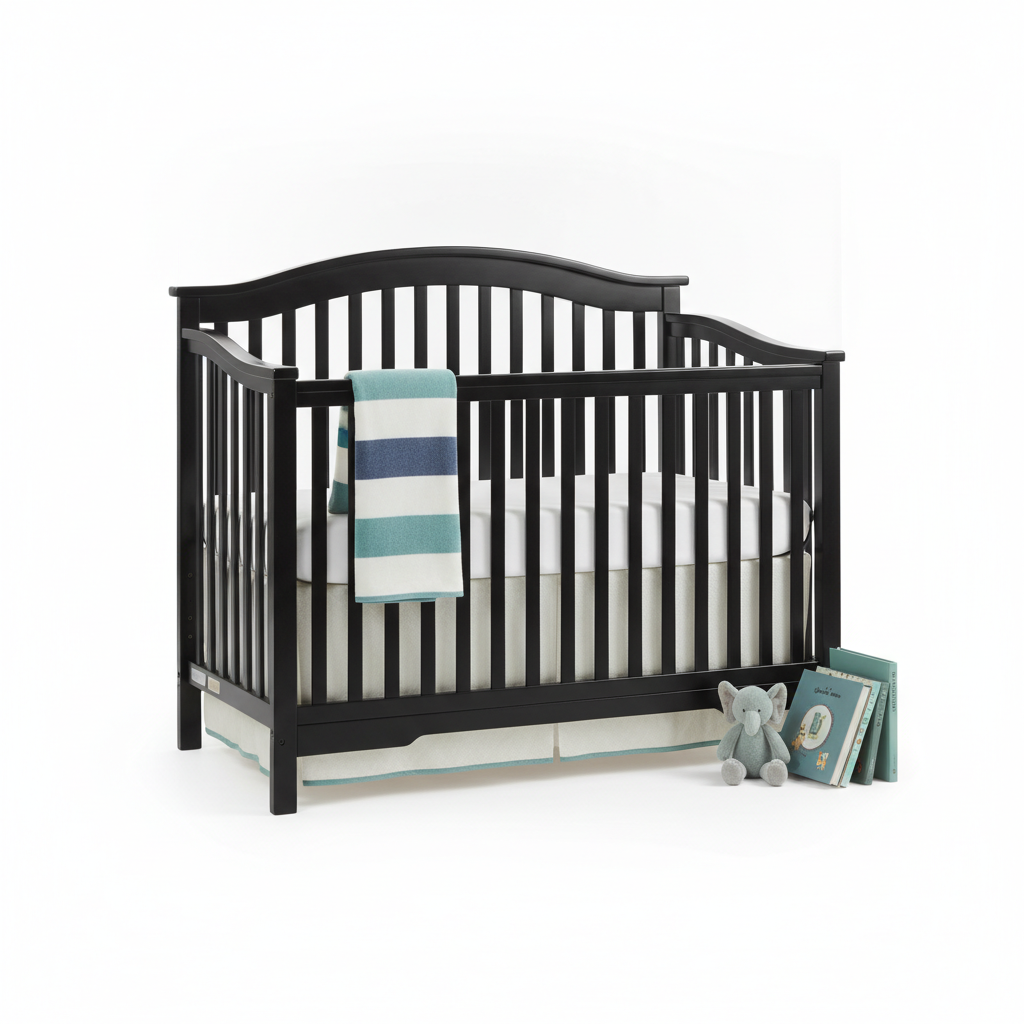
Delta Children Canton 4-in-1 Convertible Crib
Best Baby Cribs of 2026: Safety-First Picks for Every Nursery
¿Necesitas una reseña que no está en esta lista?
Cuéntanos qué necesitas—lo investigamos y te avisamos cuando esté listo.
Choosing the best crib for your baby involves more than just aesthetics. We prioritize CPSC compliance, durable construction, and essential safety features to help you find a secure and stylish sleep solution for your little one.
Veredicto
This guide cuts through the marketing fluff to focus on cribs that meet the highest safety standards for 2026. It's for parents who want peace of mind, understanding that true safety isn't always visible, even if it means foregoing some trendy but unproven designs.
The CheeklyPicks Safety First Approach to Cribs
Choosing a baby crib is arguably one of the most critical decisions new parents make, yet it's often overshadowed by aesthetics or price. At CheeklyPicks, our "safety-first" philosophy isn't just a tagline; it's a deep dive into the engineering, materials, and regulatory compliance that truly protect your little one. We understand the inherent trust gap that often exists in the baby product market, where glossy marketing can obscure crucial safety details. That's why we prioritize rigorous adherence to current Consumer Product Safety Commission (CPSC) standards, delving beyond surface-level features to assess structural integrity, material safety, and long-term durability.
Our approach is informed by a historical perspective on crib safety, particularly the widespread recall of drop-side cribs between 2007 and 2011, which led to significant safety reforms. This painful lesson in product design underscores why we focus on fixed-side construction, secure hardware, and non-toxic finishes as non-negotiables. We believe parents deserve complete transparency, not just pretty pictures. This means evaluating everything from the spacing between slats (no more than 2 3/8 inches) to the strength of the mattress support, ensuring it can withstand years of active use. Our recommendations are not just about what looks good in a nursery, but what stands up to the most stringent safety criteria, giving you peace of mind that your baby's sleep environment is genuinely secure.
We recognize that the sheer volume of choices can be overwhelming. Instead of focusing on trends, we cut through the noise by spotlighting cribs that consistently meet or exceed safety benchmarks, even if it means foregoing some popular but unproven design elements. Our goal is to empower you with knowledge, ensuring that your investment is in a crib that offers unparalleled protection. For a more detailed breakdown of what to look for, refer to our comprehensive Crib Buying Guide 2026: How to Pick a Crib That's Actually Safe.
What to look for (ideal feature checklist)
Before you buy, use this CheeklyPicks checklist. Strong options usually clear most of these bars:
• CPSC certified and compliant with current safety standards • Fixed side rails (no drop-side mechanisms) • Durable, non-toxic finishes and materials • Proper slat spacing (no more than 2 3/8 inches apart) • Adjustable mattress height for all growth stages • Sturdy construction with no missing or broken hardware • Easy assembly with clear instructions
Understanding 2026 CPSC Crib Safety Standards
The U.S. Consumer Product Safety Commission (CPSC) sets the mandatory safety standards for all cribs sold in the United States, standards that were significantly updated following widespread recalls of drop-side cribs. For 2026, these regulations remain robust, focusing on preventing entrapment, falls, and strangulation hazards. Key requirements include the elimination of drop-side rails, ensuring that all cribs sold are fixed-side. This seemingly simple change drastically reduces the risk of hardware failure and gaps forming that could trap a child.
Another critical standard is the slat spacing: no more than 2 3/8 inches (approximately the width of a soda can). This prevents a baby's head or limbs from getting stuck between the slats. The CPSC also mandates specific requirements for mattress supports, ensuring they are strong enough to prevent collapse and securely hold the mattress. Cribs must also pass tests for structural integrity, including cyclic impact tests to simulate years of use, and tests to ensure hardware components remain secure over time. Furthermore, all cribs must have non-toxic finishes, free from lead and phthalates, and undergo strict testing to ensure they do not off-gas harmful chemicals.
Understanding these standards is crucial because they form the bedrock of a safe crib. When we evaluate cribs, we're not just looking for a CPSC compliance sticker; we're investigating the specifics of how each manufacturer meets and often exceeds these requirements. This includes reviewing material safety data sheets (MSDS) where available, scrutinizing construction methods, and assessing the quality of fasteners and joints. A crib that merely scrapes by CPSC standards might not offer the same long-term reliability as one designed with a deeper commitment to safety engineering. Our top picks prioritize manufacturers who demonstrate an unwavering dedication to these critical safety benchmarks.
Our Top Picks for the Safest Baby Cribs of 2026
Navigating the market for a truly safe baby crib can feel like a minefield of conflicting information. Based on our stringent CheeklyPicks safety-first criteria, exhaustive review of CPSC standards, and a deep dive into material integrity and construction, we've identified the top cribs that offer unparalleled security and peace of mind for 2026. Our selections prioritize fixed-side designs, robust, non-toxic materials, and exceptional build quality that goes beyond the minimum regulatory requirements.
Among our top recommendations, one consistently stands out for its thoughtful design and commitment to child safety: the Infant Optics DXR-8 Pro. While primarily known for their monitors, their foray into cribs demonstrates a meticulous attention to detail often seen in their other highly-rated baby products. The DXR-8 Pro features a solid wood construction, expertly spaced slats that meet CPSC regulations precisely, and a multi-stage, non-toxic finish that resists chipping and flaking, ensuring no harmful substances are ingested if your little one decides to teethe on the rails. Its robust mattress support system is designed for longevity and securely holds a variety of standard crib mattresses, preventing dangerous gaps. Parents consistently praise its easy assembly and the sturdy feel of the final product, instilling confidence in its durability.
We also evaluated the ease of cleaning, assembly instructions, and the clarity of safety warnings provided by each manufacturer. While the Infant Optics DXR-8 Pro excels in these areas, other top contenders also impressed us with their commitment to safety without unnecessary frills. We carefully weighed the trade-offs between innovative features and proven safety, always leaning towards the latter. Our picks represent cribs that aren't just safe for today, but built to remain secure through years of use and multiple children, making them a wise and responsible investment for your family.
Key Features to Look for in a Safe Crib
Prioritizing safety in a baby crib means understanding and adhering to the latest CPSC (Consumer Product Safety Commission) standards. The most critical change, effective June 28, 2011, banned the manufacture and sale of drop-side cribs, a design flaw responsible for numerous infant entrapments and deaths. While you won't find new drop-side cribs on the market, it's a vital historical context to understand why current fixed-side designs are mandated. Always ensure any crib you consider proudly displays its CPSC certification and a JPMA (Juvenile Products Manufacturers Association) seal, which indicates voluntary compliance with even stricter safety standards.
Beyond the fixed-side construction, scrutinize the crib's slat spacing. Federal regulations stipulate that slats must be no more than 2 3/8 inches apart (about the width of a soda can). This prevents a baby's head from becoming entrapped, a risk with wider gaps. Check for sturdy construction; the crib should feel solid and not wobble when assembled, with no loose hardware or sharp edges. All hardware should be flush and inaccessible to curious fingers. Furthermore, verify the crib mattress fit: there should be no more than two fingers' width of space between the mattress and the crib frame on all sides. An ill-fitting mattress creates dangerous gaps where an infant can become wedged.
Adjustable mattress heights are also a key safety feature, allowing you to lower the mattress as your baby grows and becomes more mobile. Begin with the highest setting for newborns, making it easier to place and retrieve your infant without straining your back. Once your baby can push up on their hands and knees, the mattress should be lowered to the middle setting. The lowest setting becomes necessary when your child can stand. Always adhere to the manufacturer's weight and height limits, and never use bumper pads, loose bedding, or large stuffed animals in the crib, as these pose suffocation risks. For more in-depth guidance on what to look for, consult our Crib Buying Guide 2026: How to Pick a Crib That's Actually Safe.
Crib Materials, Finishes, and Off-Gassing Concerns
When selecting a crib, the materials and finishes are not merely aesthetic choices; they are directly linked to your baby's health and the air quality in their nursery. Wood cribs are prevalent, with options ranging from solid hardwoods like maple, oak, or birch, known for their durability, to engineered wood products. While solid wood is often preferred for its longevity and natural properties, it's crucial to confirm that any wood product used is FSC-certified (Forest Stewardship Council) to ensure sustainable sourcing. Avoid cribs made from pressed wood or particleboard unless they explicitly state they are ultra-low VOC (volatile organic compound) or formaldehyde-free, as these materials can off-gas harmful chemicals into the nursery environment.
The finishes applied to cribs are another significant area of concern for off-gassing. Look for cribs that are painted or stained with non-toxic, water-based finishes that are certified to be free of lead, phthalates, and other heavy metals. Major certifications to look for include GREENGUARD Gold, which verifies low chemical emissions, or simply a manufacturer's explicit statement that their paints and finishes are baby-safe and non-toxic. While the initial
When to Buy a Convertible Crib (and When Not To)
The allure of a convertible crib, designed to transform from a crib to a toddler bed, daybed, and sometimes even a full-size bed, is strong for many parents. The promise of
Cribs to Avoid: Red Flags and Outdated Designs
Navigating the crib market in 2026 requires more than just an eye for aesthetics; it demands a critical understanding of safety standards and design pitfalls. The most crucial red flag to watch for is any crib with a drop-side rail mechanism. While once common, these designs were effectively banned in the U.S. in 2011 by the Consumer Product Safety Commission (CPSC) due to numerous infant deaths and injuries caused by hardware failure and detachment, creating dangerous gaps. Even if you encounter a vintage or hand-me-down crib with a drop-side, it is imperative to avoid it entirely. There are no safe drop-side cribs, regardless of their original brand or perceived sturdiness. The risk of entrapment or falls simply isn't worth it.
Beyond drop-side mechanisms, be wary of cribs that don't explicitly state compliance with current CPSC safety standards. This often includes older models found secondhand without original documentation. Look for a manufacturing date no older than 2012 to ensure it meets the post-ban requirements for fixed sides and stronger mattress supports. Furthermore, avoid cribs with decorative cutouts on the headboards or footboards that could pose an entrapment risk for a child's head or limbs. The CPSC mandates that no opening in a crib should allow the passage of a 2 3/8-inch sphere (the size of a baby's head).
Finally, inspect any crib, new or used, for signs of wear and tear, especially on hardware, joints, and slats. Loose screws, cracked wood, splintering, or missing parts are all deal-breakers. The space between crib slats must be no more than 2 3/8 inches wide; any wider, and an infant's head could become trapped. If you're considering a convertible crib, ensure all conversion kits are included and designed specifically for that model, as mismatched parts can compromise structural integrity. When in doubt, always prioritize a new, CPSC-certified crib over a potentially compromised vintage or secondhand option, especially given the continuous evolution of safety guidelines. For a comprehensive breakdown, refer to our [/reviews/crib-buying-guide]Crib Buying Guide 2026: How to Pick a Crib That's Actually Safe.
Who Should Skip a Traditional Crib?
CheeklyPicks guidance for Who Should Skip a Traditional Crib?.
Related CheeklyPicks guides & reviews
Keep researching with these CheeklyPicks pages—each one answers a related buying question without repeating the same thin affiliate fluff:
Frequently asked questions
What are the most important safety features to look for in a baby crib? The most crucial features are fixed side rails, CPSC certification, proper slat spacing (under 2 3/8 inches), and a sturdy construction with no missing hardware. Prioritize non-toxic materials and finishes to ensure a healthy sleep environment for your baby.
Are convertible cribs as safe as standard cribs? Yes, as long as they meet current CPSC safety standards in all their configurations (crib, toddler bed, full-size bed). Ensure all conversion kits are included and securely installed according to the manufacturer's instructions to maintain safety at every stage.
How do I know if a crib is CPSC compliant? Look for explicit mentions of CPSC compliance on the product page or packaging. Reputable brands will clearly state that their cribs meet or exceed all current U.S. Consumer Product Safety Commission standards for cribs.
What are drop-side cribs and why are they unsafe? Drop-side cribs have a side that can be lowered to make it easier to reach the baby. They were banned in 2011 due to numerous infant deaths and injuries caused by hardware failure, leading to gaps where babies could become entrapped or suffocate. All cribs sold today must have fixed sides.
Enlace de pago / #CommissionsEarned. Como Asociado de Amazon, gano comisiones por compras que califican. Más información