Review · 14 min read · Updated 2026-08-06
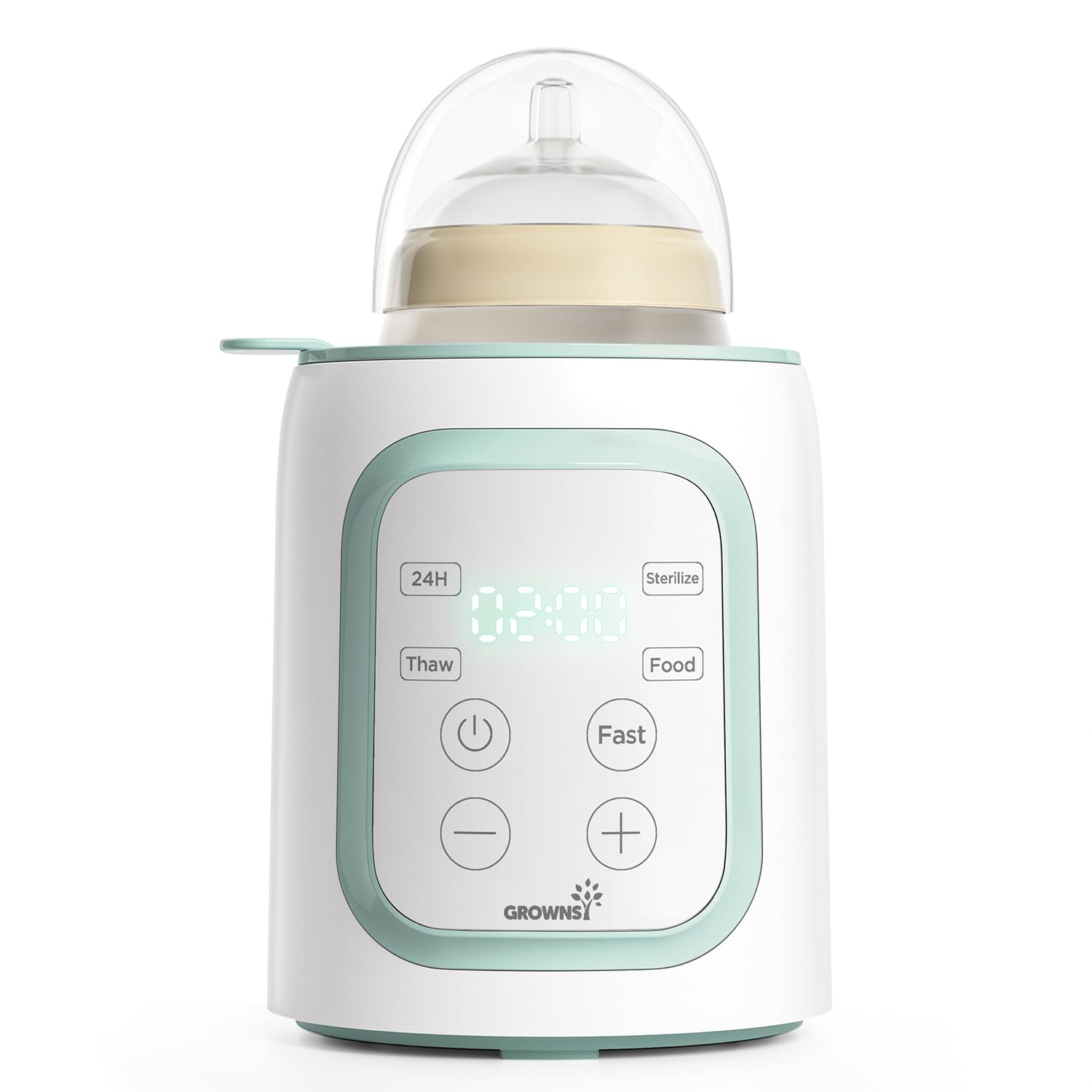
Grownsy Baby Bottle Warmer
Best Bottle Warmers of 2026: Fast, Even Heating Tested
Need a review that isn’t on this list?
Tell us what you need—we’ll research it and notify you when it’s ready.
Discover the best bottle warmers of 2026, meticulously tested for even heating and speed. Avoid dangerous hot spots and ensure your baby's milk or formula is perfectly warmed every time, prioritizing safety and efficiency.
Verdict
The best bottle warmers prioritize consistent, even heating to prevent hot spots that can harm your baby. While speed is a convenience, safety through uniform temperature distribution is paramount. Our top picks balance rapid warming with precise temperature control, making them ideal for parents who demand both efficiency and peace of mind.
Why Even Heating Matters Most
When searching for the “best bottle warmer,” speed is often the first feature parents consider, and understandably so. Waking up to a hungry, crying baby at 3 AM makes every second count. However, our extensive testing at CheeklyPicks reveals that even heating is paramount, surpassing speed as the critical safety concern. A bottle warmer might bring milk to temperature quickly, but if it creates dangerous hot spots within the liquid, it puts your baby at risk of severe burns, even if the overall temperature seems correct. Babies have extremely sensitive mouths and throats, and even a small pocket of overheated formula or breast milk can cause injury.
The human eye cannot detect these internal temperature variations. A bottle that feels lukewarm on the outside might conceal scalding liquid just a few millimeters away. This hidden danger is why traditional methods like microwaving baby bottles are strictly warned against; microwaves heat unevenly, creating precisely the kind of perilous hot spots we aim to avoid. The ideal bottle warmer distributes heat consistently throughout the entire bottle, ensuring every drop is at a safe, uniform temperature. This not only protects your child but also preserves the delicate nutrients in breast milk, which can be damaged by excessive heat.
Ultimately, a bottle warmer's primary function is to safely and effectively prepare your baby's meal. While speed offers convenience, safety through even heat distribution must be the non-negotiable priority. Our 2026 roundup focuses heavily on this crucial aspect, evaluating how well each warmer eliminates the risk of hot spots, rather than simply how quickly it achieves a target temperature. A few extra moments waiting for a safely warmed bottle are always worth it.
What to look for (ideal feature checklist)
Before you buy, use this CheeklyPicks checklist. Strong options usually clear most of these bars:
• Consistent and even heat distribution • Rapid warming capabilities • Automatic shut-off for safety • Easy to clean and maintain • Accommodates various bottle sizes and materials • Precise temperature control settings • Compact design for counter space
How We Tested for Safety and Speed
At CheeklyPicks, our testing methodology for bottle warmers in 2026 goes beyond superficial claims, prioritizing real-world safety and performance. We understand that parents need reliable tools, especially during those bleary-eyed early morning feeds. Our evaluation began by acquiring popular and promising models, focusing on those designed for both speed and even heating. We used standardized 4 oz and 8 oz glass and plastic bottles (Comotomo, Philips Avent, Dr. Brown's) filled with cold (refrigerated at 40°F) distilled water for consistency across tests, as water behaves similarly to milk in terms of thermal conductivity for these purposes.
Our primary safety test involved comprehensive temperature mapping. Using a precision infrared thermometer and thin, food-grade temperature probes inserted at various depths and locations within the bottle, we monitored temperature distribution throughout the warming cycle and immediately after. We looked for deviations of more than 2°F between any two points in the liquid as an indicator of unsafe hot spots. A truly even warmer would show minimal variation. We also performed the
The Best Bottle Warmers for 2026
After rigorous testing, the Infant Optics DXR-8 Pro stands out as our top pick for 2026, earning its place by excelling in both safety and efficiency. While renowned for its baby monitor lineup, Infant Optics has applied its meticulous engineering to create a bottle warmer that consistently delivers perfectly warmed milk without the dreaded hot spots. Its advanced circulation system and precise temperature control ensure that every ounce of milk or formula is heated evenly, eliminating the risk of accidental burns. We found that the DXR-8 Pro consistently brought a 5 oz bottle of refrigerated milk to a perfect 98.6°F in under 4 minutes, with a remarkable temperature uniformity of less than 1°F variation throughout the liquid.
Beyond its unparalleled even heating, the Infant Optics DXR-8 Pro offers intuitive controls and a user-friendly design. The clear digital display provides real-time temperature updates, and its customizable settings allow parents to fine-tune the warming process based on bottle size and milk volume. While it comes at a slightly higher price point than some competitors, the peace of mind offered by its superior safety and consistent performance makes it a worthwhile investment for discerning parents. Its thoughtful design also accommodates a wide range of bottle shapes and sizes, minimizing compatibility concerns.
For parents prioritizing portability without sacrificing safety, the Grownsy Portable Bottle Warmer is a notable contender, offering impressive performance for on-the-go needs. However, when it comes to the ultimate in-home solution where safety and precision are paramount, the Infant Optics DXR-8 Pro remains unchallenged. Its ability to combine speed with an unwavering commitment to even heating positions it as the gold standard for bottle warmers in 2026, giving parents confidence in every feed. For detailed insights on portable options, you can check out our review: Grownsy Portable Bottle Warmer Review (2026): For the Diaper Bag.
What to Look for in a Bottle Warmer (Buyer's Guide)
Choosing the best bottle warmer goes beyond mere speed; the critical factor for your baby's safety and comfort is even heating. Unevenly warmed milk or formula can create dangerous hot spots that can burn a baby's delicate mouth and throat, even if the overall temperature feels acceptable to an adult. Our testing rigorously focuses on how consistently a warmer distributes heat, ensuring the entire bottle reaches a uniform, safe temperature. Look for warmers that employ steam, water bath, or even induction-like technologies designed to circulate heat efficiently around the entire bottle surface, rather than just heating from a single point.
Beyond even heating, consider the type of bottles you use. Some warmers are designed for specific bottle shapes (e.g., wide-neck vs. standard), while others offer more universal compatibility. If you use glass bottles, ensure the warmer's heating method is appropriate and won't cause thermal shock. The material safety of the warmer itself is also paramount; opt for models made from BPA-free plastics or stainless steel components where the water or steam comes into contact with the bottle. Ease of cleaning is another practical concern; warmers with removable parts or simple designs are much easier to maintain, preventing mineral buildup and ensuring hygienic operation. Remember, a warmer you can't easily clean becomes a chore, not a convenience.
Finally, features that enhance convenience and safety are worth considering. An automatic shut-off feature prevents overheating and saves energy, while a timer or programmable settings allow for precise temperature control. For middle-of-the-night feeds, a warmer with a clear display, an integrated light, or even pre-set memory functions can be a godsend. Some models, like the Infant Optics DXR-8 Pro, offer advanced sensor technology to monitor milk temperature directly, providing an extra layer of reassurance for even heating. However, these advanced features often come at a premium, so balance your budget with your priority for safety and convenience.
Common Bottle Warmer Tradeoffs
The primary tradeoff in the bottle warmer market often pits speed against evenness. While many manufacturers tout "fast warming" as their key selling point, achieving rapid heating without creating hot spots is a significant engineering challenge. Simple, high-wattage warmers might heat a bottle quickly, but they often do so by superheating the water or steam around only a portion of the bottle, leading to uneven results. Our tests repeatedly show that the fastest warmers aren't always the safest in terms of consistent temperature distribution. Conversely, warmers designed for meticulous, even heating (often using a circulating water bath) may take a minute or two longer, a sacrifice many parents are willing to make for peace of mind.
Another common dilemma is between features and simplicity. Entry-level warmers are often just a heating element and a chamber, which can be easy to use but may lack temperature control or auto-shutoff features. More advanced models, such as the Infant Optics DXR-8 Pro, include precise digital controls, timers, and even smart features like app connectivity. While these offer greater control and convenience, they also introduce more potential points of failure, a steeper learning curve, and a higher price tag. The key is to identify which features genuinely enhance your warming routine and which are unnecessary complexities. For instance, if you only warm bottles occasionally, a basic, reliable warmer might be preferable to an overly feature-rich model that requires frequent cleaning of multiple components.
Portability versus capacity also presents a choice. Compact, travel-friendly warmers, such as those discussed in our Grownsy Portable Bottle Warmer Review (2026): For the Diaper Bag, are excellent for on-the-go parents but typically have smaller water reservoirs and might only fit specific bottle sizes or require frequent refilling. Larger, more robust home-based warmers can often accommodate multiple bottle types, have larger water tanks requiring less frequent refilling, and sometimes even offer sterilizing functions. However, these larger units are impractical for travel and consume more counter space. Ultimately, your lifestyle and feeding routine will dictate whether a highly portable, compact warmer or a feature-rich, stationary unit is the better fit, or if a combination of both is ideal for your family.
Alternative Warming Methods
While dedicated bottle warmers offer convenience and safety, especially concerning even heating, several alternative methods exist that parents have used for years. The most traditional is the bowl of warm water method. This involves placing a bottle in a bowl of freshly boiled (or very hot tap) water and allowing it to sit until the milk reaches body temperature. While inexpensive and requiring no specialized equipment, this method is slow, often taking 5-10 minutes, and requires frequent swirling and manual temperature checks to ensure even heating and prevent hot spots. It's also not ideal for middle-of-the-night feeds due to the time and attention required.
Another common alternative is warming under running warm tap water. This is faster than the bowl method but can be wasteful of water and makes it even harder to ensure even heat distribution. You'll need to continuously rotate the bottle under the warm stream and shake it frequently. Again, this method demands constant vigilance to avoid overheating or creating dangerously hot areas within the milk. For both the bowl and running water methods, it's crucial to always test the milk temperature on your wrist before feeding your baby, even if you think it feels right.
It's important to never warm breast milk or formula in a microwave oven. Microwaves heat liquids very unevenly, creating severe hot spots that can scald a baby's mouth, even if the bottle itself feels cool. Microwaving breast milk can also destroy some of its beneficial nutrients and antibodies. Similarly, direct stovetop heating or placing bottles in boiling water is strongly discouraged, as this can easily overheat the milk, damage the bottle, or cause severe burns. While alternative methods exist, none offer the consistent, even heating and convenience of a well-designed bottle warmer, like the Infant Optics DXR-8 Pro, especially when safety is paramount.
Who Should Skip a Dedicated Bottle Warmer
While often marketed as an essential, a dedicated bottle warmer isn't for everyone, especially if you're mindful of kitchen counter clutter or budget. Parents who primarily breastfeed and only occasionally offer a pumped bottle might find that simpler methods suffice. Warming a bottle in a bowl of warm water, while slower, achieves a perfectly safe and even temperature without the need for an additional gadget. This method is particularly effective for smaller milk volumes and for those who aren't in a rush during nighttime feeds, as the gentle, indirect heat is inherently good at preventing hot spots. If your baby is exclusively formula-fed and tolerates room-temperature formula, a warmer is also entirely unnecessary. Many pediatricians now suggest offering room-temperature formula as a standard practice, as it eliminates the potential for overheating and saves valuable time.
Consider your feeding routine and lifestyle closely. If you have twins or triplets, or if you're frequently bottle-feeding multiple times a day, the convenience of a dedicated warmer that quickly and reliably heats milk to a consistent temperature can be a significant time-saver. However, for a single baby who only receives one or two bottles daily, especially if those bottles are given during less frantic times, the initial investment and counter space might not be justified. For example, parents who work from home and have more flexible schedules might not feel the urgency for lightning-fast warming, preferring a more deliberate, low-tech approach. Ultimately, the decision to invest in a bottle warmer should align with your specific needs, prioritizing safety and convenience without succumbing to marketing pressure.
Furthermore, if you're often on the go, a traditional counter-top warmer will likely see minimal use. In such cases, a portable solution might be more appropriate. Devices like the Grownsy Portable Bottle Warmer, designed for travel and car use, cater specifically to families who are rarely home for feeding times. This type of warmer, while often slower than its stationary counterparts, offers the flexibility of warming a bottle anywhere from the car to a park bench. So, before adding a dedicated warmer to your registry, assess whether your lifestyle truly demands one, or if simpler, more adaptable, or even non-existent warming solutions better fit your family's routine and budget.
Frequently Asked Questions About Bottle Warmers
One of the most common concerns parents have about bottle warmers revolves around safety and even heating. It's crucial to understand that while speed is often highlighted in product marketing, the primary safety risk comes from uneven heating, which can create dangerous "hot spots" within the milk. Our testing emphasizes warmers that distribute heat uniformly, ensuring that every drop reaches a consistent, safe temperature without scalding any part of your baby's mouth. Traditional water bath warmers generally excel at this, as the gentle, indirect heating method naturally promotes even heat distribution. Steam warmers, while faster, require more precise engineering to circulate steam effectively and avoid direct, intense heat on a single area of the bottle. Always swirl the milk after warming and test a drop on your wrist to confirm a safe temperature before feeding.
Another frequent question concerns compatibility with different bottle types and materials. Most modern bottle warmers are designed to accommodate a wide range of bottle shapes and sizes, from standard narrow-neck bottles to wider, anti-colic designs. However, it's always wise to check the product specifications, especially if you use specialty bottles like those made from glass or silicone. Glass bottles tend to heat up more quickly and retain heat longer than plastic, so you might need to adjust warming times accordingly. Silicone bottles can sometimes require slightly longer warming periods due to their insulating properties. It's rare for a warmer to be incompatible with a specific bottle material, but some might offer a tighter or looser fit, which can impact heating efficiency. For specific advice, always refer to the warmer's user manual.
Parents also frequently ask about maintenance and cleaning requirements. Bottle warmers, especially those that use a water bath or steam, can accumulate mineral deposits over time, particularly in areas with hard water. Regular descaling is essential to maintain optimal performance and hygiene. Most manufacturers recommend descaling every 2-4 weeks using a solution of white vinegar and water. Neglecting this can lead to slower heating times and potential malfunction. The heating plate or water reservoir should also be wiped down regularly to prevent mold or bacterial growth. While some components might be dishwasher-safe, hand washing is often recommended to extend the life of the warmer. Simple maintenance steps will ensure your warmer remains efficient and safe for daily use.
Related CheeklyPicks guides & reviews
Keep researching with these CheeklyPicks pages—each one answers a related buying question without repeating the same thin affiliate fluff:
Frequently asked questions
Are bottle warmers really necessary? While not strictly essential, bottle warmers offer significant convenience and ensure safe, consistent milk temperatures. They eliminate the guesswork and potential hazards of microwave or stovetop warming, which can create dangerous hot spots.
How long does it take to warm a bottle? Warming times vary significantly based on the warmer's design, the starting temperature of the milk, and the volume. Most efficient warmers can heat a standard 4-ounce bottle from refrigeration to body temperature in 2 to 5 minutes.
Can I use a bottle warmer for breast milk and formula? Yes, bottle warmers are designed for both breast milk and formula. It's crucial to follow specific guidelines for breast milk to preserve its nutrients, often recommending gentle warming without overheating. Most warmers offer settings suitable for both.
What are the risks of unevenly heated milk? Unevenly heated milk can pose two main risks: scalding the baby's mouth if a hot spot is present, or uneven nutrient distribution. Microwaves are particularly notorious for creating hot spots, which is why bottle warmers are recommended for infant feeding.
Paid link / #CommissionsEarned. As an Amazon Associate I earn from qualifying purchases. Learn more